Reverse osmosis in Barcelona: price, maintenance and whether it is worth it
November 10, 2026 · 7 min
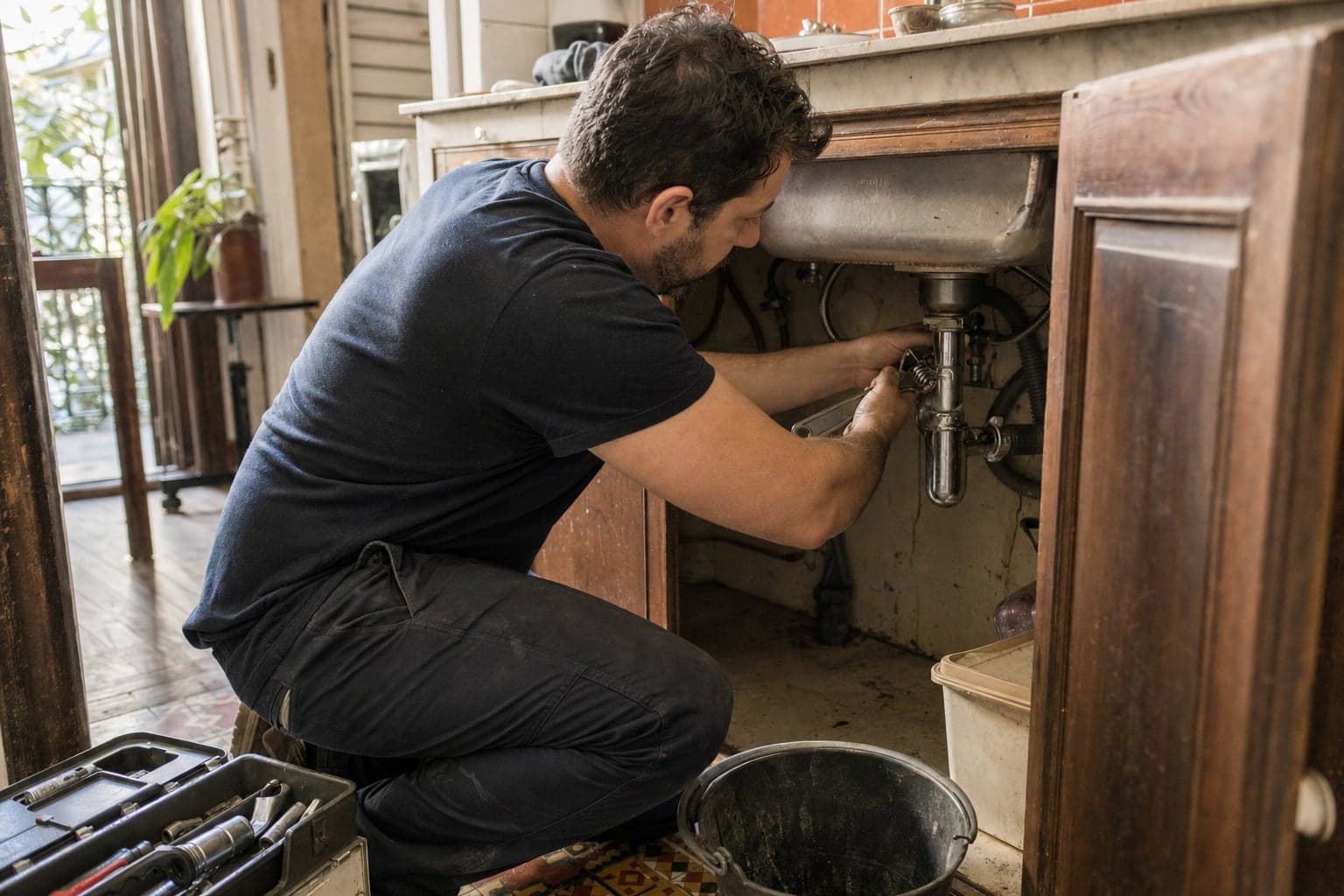
Installing an under-sink reverse-osmosis system in Barcelona costs from €90 in labour, not counting the unit itself, and servicing with a filter change costs from €50, filters extra. It is worth it mainly if your household buys bottled water or if the chlorine and limescale taste of the tap water means nobody drinks it. If what bothers you is limescale in the water heater, the taps or the washing machine, reverse osmosis is not the answer: that is what a water softener is for.
How much does reverse osmosis installation cost in Barcelona
The cost has two parts worth keeping apart: the unit, which you can buy yourself or we can quote separately, and the installation. These are our indicative reference prices:
| Item | Indicative price | Note |
|---|---|---|
| Reverse-osmosis system installation | from €90 | unit not included |
| Servicing (filter change) | from €50 | filters not included |
| Reverse-osmosis unit | depends on the model | quoted separately or supplied by you |
| Call-out + first hour (other jobs or diagnosis) | from €60 | travel within Barcelona included |
| Additional hour | from €35 | if the installation gets complicated |
The installation price goes up when something has to be adapted. The most common cases in Barcelona flats:
- There is no free cold-water connection under the sink, so a valve or a tee has to be added.
- A hole for the osmosis tap has to be drilled in a stone worktop or in a sink that does not have one.
- The drain is far away or in poor condition and the connection for the reject water has to be prepared.
- The cabinet under the sink is narrow or already taken by a water heater, recycling bins or the dishwasher.
- Water pressure is low (it happens in some top-floor flats and older Eixample or Gràcia buildings) and the unit needs a pump.
What reverse osmosis does and does not do
A domestic reverse-osmosis unit pushes water through several filters and a membrane that holds back most dissolved salts, limescale and the chlorine taste. The treated water comes out of its own tap, usually next to the main kitchen tap. Be clear about its scope:
- Yes: water for drinking, cooking, coffee and tea, and for the coffee machine or kettle, which scale up less.
- Yes: no more carrying water bottles up the stairs, which you notice in walk-up flats in Ciutat Vella or Gràcia.
- No: it does not treat the water in the shower, the water heater, the washing machine or the other taps in the home.
- No: it does not remove limescale from shower screens, taps or appliances; a whole-home water softener does that.
- Keep in mind: it produces reject water that goes down the drain. How much depends on the unit and on your water pressure.
How to tell whether it is worth it for you
Barcelona tap water is safe to drink, and the water supplier (Aigües de Barcelona in the city) publishes water quality data you can check for your area. Reverse osmosis is not a safety issue but a matter of taste, convenience and spending. It usually pays off if several of these apply to you:
- You buy bottled water every week: add up your monthly spend and compare it with the installation plus one filter change a year.
- Nobody drinks tap water at home because you dislike the taste, even though you know it is safe.
- You cook a lot with water (stocks, rice, pulses) or have an espresso machine you want to scale up less.
- You live on a high floor with no lift and carrying bottles up is a real hassle.
- You rent and the landlord agrees to the unit: it can be removed when you leave, with the connection put back as it was.
On the other hand, it is probably not worth it if you hardly drink water at home, if you already use a filter jug and are happy with it, or if there is no room under the sink and you do not want to give up that cupboard.
Real maintenance: filters, membrane and sanitising
Maintenance is the part people forget. A neglected unit can end up producing worse water than the tap. Intervals depend on the model, how much you use it and the incoming water; these are the usual ones:
| Component | Indicative interval | If not replaced |
|---|---|---|
| Pre-filters (sediment and carbon) | every 6–12 months | the chlorine taste returns and the membrane wears out sooner |
| Osmosis membrane | every few years, depending on use | the water carries more salts and the flow drops |
| Post-filter or remineraliser | with the pre-filters or as the maker says | the water may taste odd |
| Sanitising the circuit and tank | at every filter change | risk of bad smells in the tank |
In our servicing visit (from €50, filters extra) we replace the cartridges, check the membrane and the fittings, make sure nothing is leaking under the sink and note the date of the next change for you. Always ask which filters your unit takes and whether they are easy to find.
What to check before buying the unit
- Space: measure the space under the sink. Units with a storage tank take up quite a lot; direct-flow units are more compact, although they usually need a power socket.
- Spare parts: the filters should be standard or easy to get in Barcelona, not available through a single channel only.
- Reject water: ask how much water that model discards and whether it has features to reduce it; it depends on the unit.
- Remineralisation: some units add minerals at the end to improve the taste; it is a matter of preference.
- Tap: check whether one is included and whether you want a separate tap or a three-way mixer that also delivers the osmosis water.
- Warranty and service: who changes the filters and what each change costs, before signing a maintenance contract.
Common mistakes
- Buying reverse osmosis expecting it to remove limescale from the shower screen or the water heater: it never reaches them.
- Signing a multi-year rental or maintenance contract without checking what it costs to cancel.
- Installing the unit with no drip tray and without checking the fittings: a small leak in the sink cupboard can go unnoticed for weeks.
- Skipping filter changes for years because the water «still comes out».
- Connecting the reject line to a drain that is already borderline, then getting smells or gurgling.
Frequently asked questions
How long does a reverse-osmosis installation take? A standard under-sink installation usually takes one to two hours if the water connection and the drain are easy to reach. If a stone worktop has to be drilled or the connection adapted, it can take longer.
Can I install reverse osmosis in a rented flat? Yes, it is generally a reversible installation connected to the cold-water supply and the sink drain. The sensible thing is to tell your landlord first, especially if a hole has to be drilled in the worktop.
How often do the filters need changing? Pre-filters are usually changed every 6–12 months and the membrane every few years, depending on the model and use. Servicing with a filter change costs from €50, filters extra.
Does reverse osmosis waste a lot of water? It produces some reject water that goes down the drain, and the amount depends on the unit and your water pressure. Some models reduce that reject flow, so ask before you buy.
Can I use osmosis water in my iron and coffee machine? Yes, and it is one of its practical uses, because those appliances scale up less. For the iron, check what the manufacturer recommends, as some models ask for a specific type of water.
If you would like a reverse-osmosis system installed or your current one serviced, ask for a free quote from our plumbing service in Barcelona: send us a photo of the cupboard under your sink and we will reply within 24 hours.
This article is part of our Plumbing service.