Electrical certificate (boletín eléctrico / CIE) in Catalonia: what it is, when you need it and what it costs
November 10, 2026 · 6 min
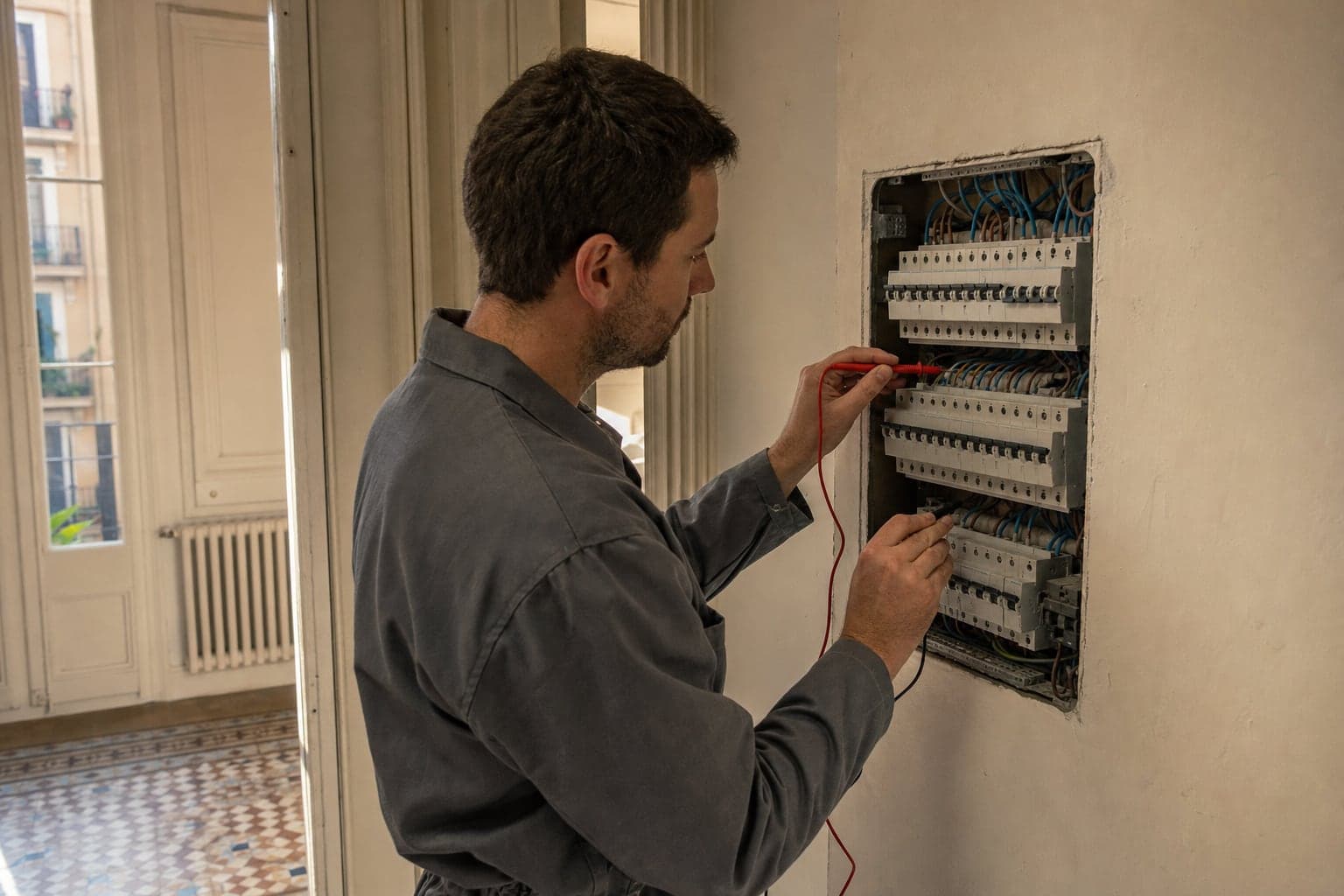
The boletín eléctrico, officially the certificado de instalación eléctrica (CIE, electrical installation certificate), is the document in which an authorised installation company (empresa instaladora habilitada) certifies that the wiring of a home or business premises complies with Spain's low-voltage electrical regulations (REBT). It is then registered with the Generalitat de Catalunya. You need it, for example, to set up a new supply, to raise your power above the level stated on the existing certificate, to reactivate a supply that has been disconnected for a long time, or after major changes to the installation. There is no single price: it mainly depends on whether the installation is already in good order or needs upgrading before it can be certified.
What the CIE is and who issues it
The CIE is not something you file yourself, and it is not a document the electricity company gives you. It is signed by an authorised installation company, which takes responsibility for the installation having been carried out or checked in line with current regulations. It is then registered online with the Generalitat de Catalunya, and that registration is what the distribution company in your area (in most of Barcelona, e-distribución) relies on to connect or modify your supply.
It helps to separate two players: the distribution company (distribuidora) owns the grid and the meter, while the supplier (comercializadora) is the one that bills you. The CIE matters mainly to the distribution company, even though you usually start a new connection or power change through your supplier.
- It identifies the home or premises and the holder
- It states the installation's maximum admissible power, which is not the same as the power you have contracted
- It describes the circuits, the protective devices and the cross-section of the main cables
- It carries the signature and details of the authorised installation company that takes responsibility
When you will be asked for the certificate
You do not need a new certificate every time you switch supplier or put the electricity in your name in a flat that already has an active supply. These are the usual situations in which you will be asked for one:
- A brand-new supply: new build, premises being split, or a home that has never had its own meter
- A power increase above the maximum admissible power shown on the existing certificate
- Reactivating a supply that has been disconnected for a long period; the threshold is set by the distribution company and the regulations, so confirm it for your case
- Major works on the installation: full rewiring, new circuits, change of use of a commercial unit
- New related installations, such as a dedicated line for an electric car charging point
In older flats in the Eixample, Gràcia or Ciutat Vella, the last certificate is often decades old or simply cannot be found. If you plan to increase power or reactivate a supply, the first step is to find out what paperwork exists: sometimes the previous owner or the building's property manager (administrador de fincas) has it.
What the installer checks before signing
A responsible installer will not sign a CIE without seeing the installation. Before certifying, they check at least the following:
- That the consumer unit has a main switch, an RCD and suitable circuit breakers for each circuit
- That there is an earth connection and that its value is correct
- That cable cross-sections match the power to be certified
- That circuits are separated as the REBT requires (lighting, sockets, cooker and oven, washing machine and water heater, bathroom and kitchen sockets)
- The condition of the individual feeder, the section that runs from the meter to your home
If everything is in order, the certificate is issued. If not, the installer will explain what has to be brought up to standard first. This is common with installations that still have porcelain fuses, unearthed cables or a single RCD for the whole home.
How much the electrical certificate costs
The price depends on the inspection and, above all, on any upgrade work required. The fees and charges the distribution company applies to a new connection or a power increase are a separate, regulated item that appears on your bill or in the distribution company's offer. As a guide, this is how the cost breaks down depending on your starting point, using our indicative rates:
| Condition of the installation | What is usually needed | Indicative price |
|---|---|---|
| Recent installation in good condition | Visit, checks and issuing the certificate | Quoted after the visit (visit + first hour from €60) |
| Outdated consumer unit, rest fine | Replacing the consumer unit before certifying | from €450, materials included, standard home |
| Some circuits or protections missing | Adding an RCD, circuits or adapting lines | Per point; additional hour from €35 |
| Old installation with no earth or separate circuits | Full rewiring of the installation | from €55/m², depending on the number of points |
Be wary of a very cheap certificate with no prior visit: if the installer signs without checking, you carry the risk of an unsafe installation, and if the distribution company spots problems, the process is delayed.
Periodic inspections and OCAs
Some installations, depending on their type and power, must also undergo periodic inspections by an approved inspection body (OCA, organismo de control). This typically applies to premises open to the public and to certain garages and shared building services. An ordinary home generally has no such periodic obligation, but the exact criteria are set by current regulations, so check them if you run a business or manage a residents' association.
Steps to get the certificate without wasting time
- Gather whatever paperwork exists: previous certificate, the CUPS number from your bill and your contracted power
- Decide how much power you actually need: think about an induction hob, oven, air conditioning or a future car charger
- Book a visit from an authorised installation company to check the consumer unit, earthing and wiring
- If upgrades are needed, ask for a written quote before work starts
- Once done, the installer issues the CIE and registers it with the Generalitat
- With the certificate registered, you request the new connection or power change through your supplier
Frequently asked questions
Are the boletín eléctrico and the CIE the same thing? Yes. «Boletín» is the everyday name and CIE (certificado de instalación eléctrica) is the technical name of the document issued by the installation company and registered with the Generalitat.
Do I need a new certificate to put the electricity in my name? Usually not, if the supply is active and you are not changing the power: a change of holder through your supplier is enough. It is required for a new connection, a power increase beyond what is certified, or when the supply has been disconnected for a long time.
Does the certificate expire? The certificate itself has no expiry date for a home in use, but if the supply has been off for a long time or the installation has changed, the distribution company may require a new one. Check which rule applies in your specific case.
How long does it take to get one? If the installation is in good condition, the inspection and certificate can be sorted within a few days. If the consumer unit needs replacing or circuits need renewing, add the time for that work; after that, the distribution company has its own timescales to connect or modify the supply.
Can any electrician sign it? No. It must be signed by an installation company authorised for low-voltage work, which is legally responsible for what it certifies.
If you need the certificate for a new connection, a power increase or after renovation work, ask our electrical service for a free quote: we check your installation, tell you in writing what is needed and reply within 24 hours.
This article is part of our Electrical work service.