EV charging point in a shared residential garage in Barcelona: price and steps
November 10, 2026 · 5 min
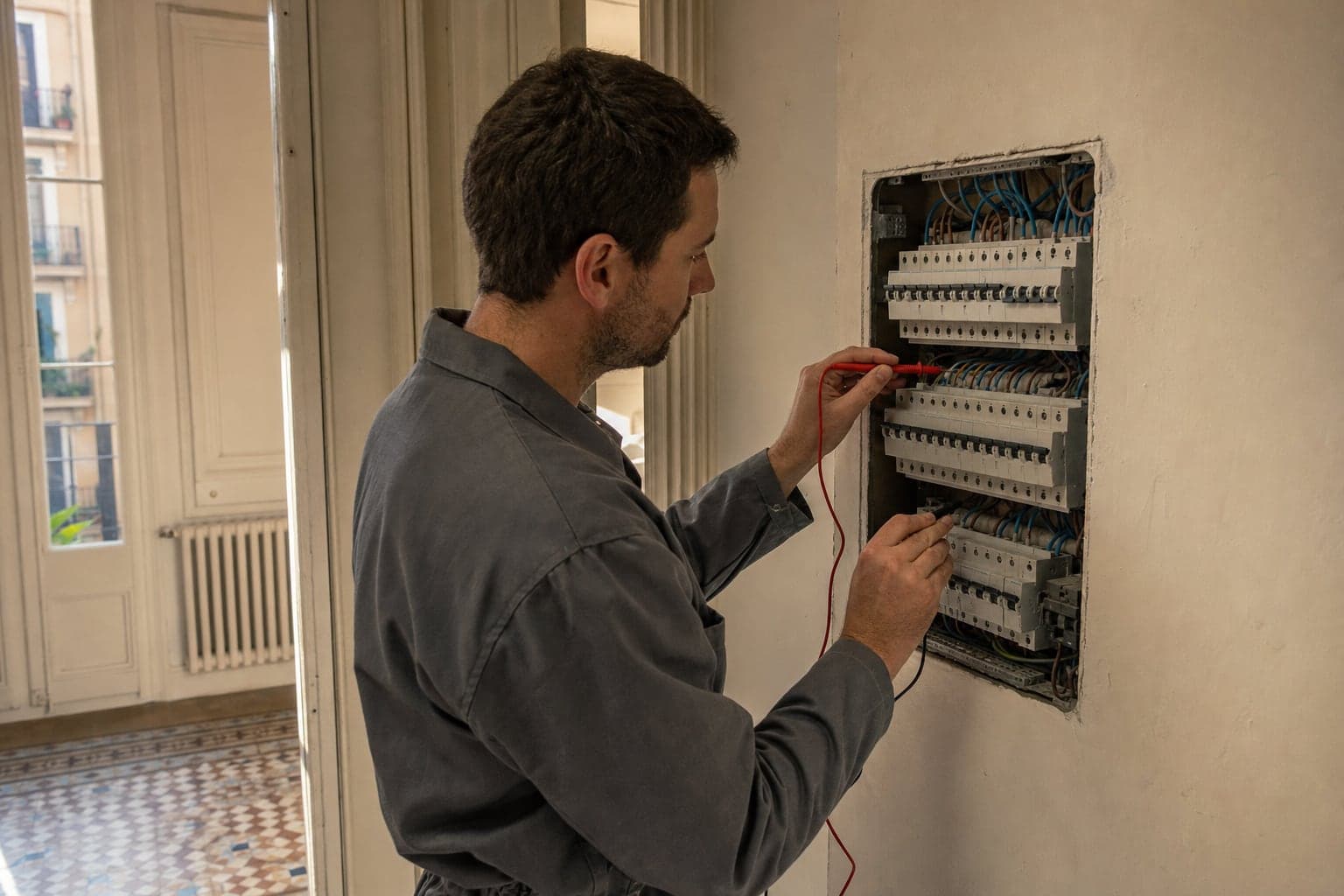
Installing an electric car charging point in your space in a shared residential garage in Barcelona costs from €700, not including the charger itself (the wallbox). The price depends mainly on the distance between your meter and your parking space, and on the route the cable has to take. If the space is yours, or you rent it, and you pay for the installation and the electricity, Spain's Horizontal Property Act (Ley de Propiedad Horizontal) only requires you to notify the residents' association (comunidad de propietarios) in advance: no vote is needed.
How much a charging point in a shared garage costs
| Item | Indicative price | Notes |
|---|---|---|
| Charging point installation | from €700 | Dedicated line and protective devices; depends on distance to the meter |
| Charger (wallbox) | Not included | You choose it, or we advise you based on your car |
| Preliminary technical visit | from €60 | Visit + first hour, travel within Barcelona included |
| Long runs or several basement levels | Quoted after the visit | More cable, conduit and protective devices |
| Installation certificate (CIE) | Stated in the quote | The new line is certified and registered |
The charger is priced separately because the range is wide: power, connectivity, load management and single-phase versus three-phase all change the cost considerably. We help you choose on technical criteria, not by brand.
What the law says: notification, not a vote
Article 17.5 of the Ley de Propiedad Horizontal states that installing a charging point for private use in the building's car park, provided it is in an individual parking space, only requires prior notification to the residents' association. The cost of the installation and the electricity consumed are borne entirely by whoever installs it.
- Notify the president or the property manager (administrador de fincas) in writing before work starts
- State your space number, who is doing the installation and the route the line will take through common areas
- Keep a copy of your notification and of any reply
- If the community has a collective charging project, ask how your installation fits in so conduits are not duplicated
The community does not vote on whether you can install it, but it is reasonable to agree practical details of the route with the property manager, such as running the cable tray along the garage ceiling rather than the floor. If the building has special bylaws or a particular legal regime, check your case.
Technical options: from your own meter or a shared solution
Technical instruction ITC-BT-52 of Spain's low-voltage regulations (REBT) covers EV charging installations and allows several layouts. In residential garages, the most common are:
- A line from your own meter: a new cable runs from the building's meter room to your space, and charging is added to your home's electricity bill. This is the most common option
- A dedicated meter for charging: your space gets its own supply, separate from your flat's, which usually involves paperwork with the distribution company
- A collective installation for the community: a shared line with load management and individual metering for each user, decided and funded by the community
In recent buildings, for example in areas such as Diagonal Mar or 22@, there may already be pre-installed conduits up to the parking spaces, which lowers the cost. In older buildings, with the meters on the ground floor and the garage one or two levels below, the cable run is longer and that is where the price varies most.
Steps to install your charging point
- Check where your meter is and where your space is; take photos of both if you can
- Book a technical visit to measure the cable run and review your contracted power
- Get a fixed written quote, with the installation and, if you want one, the charger listed separately
- Send the prior notification to the community with a description of the installation
- Installation: dedicated line, its own protective devices (RCD and circuit breaker) and mounting the charger
- Installation certificate (CIE) and registration with the Generalitat
- If needed, adjust your contracted power with your electricity supplier
Power and consumption: what to check
A typical single-phase home charger works at up to about 7.4 kW. If your contracted power at home is tight, charging the car while the oven or air conditioning is running can trip the main switch. There are two usual fixes: increase your contracted power, or use a charger with dynamic load management, which lowers the charging power when the home is drawing more. If you mainly charge at night, also check what time-of-use pricing your tariff offers.
Grants for charging points
The MOVES programme, managed in Catalonia by ICAEN, has subsidised part of the cost of charging points in various rounds. Whether funds are available, and on what terms, depends on the current call, so check whether the call is still open before counting on the grant. Keep invoices, the certificate and photos of the installation in case you can apply. We explain this in more detail in our guide to MOVES grants for charging points.
Frequently asked questions
Do I need the community's permission to install a charger in my space? No vote is needed: under article 17.5 of the Ley de Propiedad Horizontal, prior notification is enough, as long as it is an individual space and you bear the cost and the electricity.
How much does it cost to install a charging point in a shared garage? In Barcelona, from €700 excluding the charger. The final price depends on the distance from your meter to the space and on the route through common areas.
Can I install one if I rent the parking space? Generally yes, with the space owner's permission and prior notification to the community. It is wise to agree in writing with the owner what happens to the installation when the rental ends.
Is the car's charging added to my electricity bill? If the line comes from your meter, yes: charging is added to your home's consumption. With a dedicated meter for the space, you would get a separate bill.
Do I have to increase my contracted power? Not always. It depends on your current power, the charger and your charging habits; a charger with dynamic load management can avoid the increase. We assess it during the visit.
If you want to install a charging point in your space in a shared garage, ask our electrical service for a free quote: we measure the run from your meter, give you a fixed price and reply within 24 hours.
This article is part of our Electrical work service.