MOVES grants for a home EV charging point: how they work and what to check in 2026
November 10, 2026 · 5 min
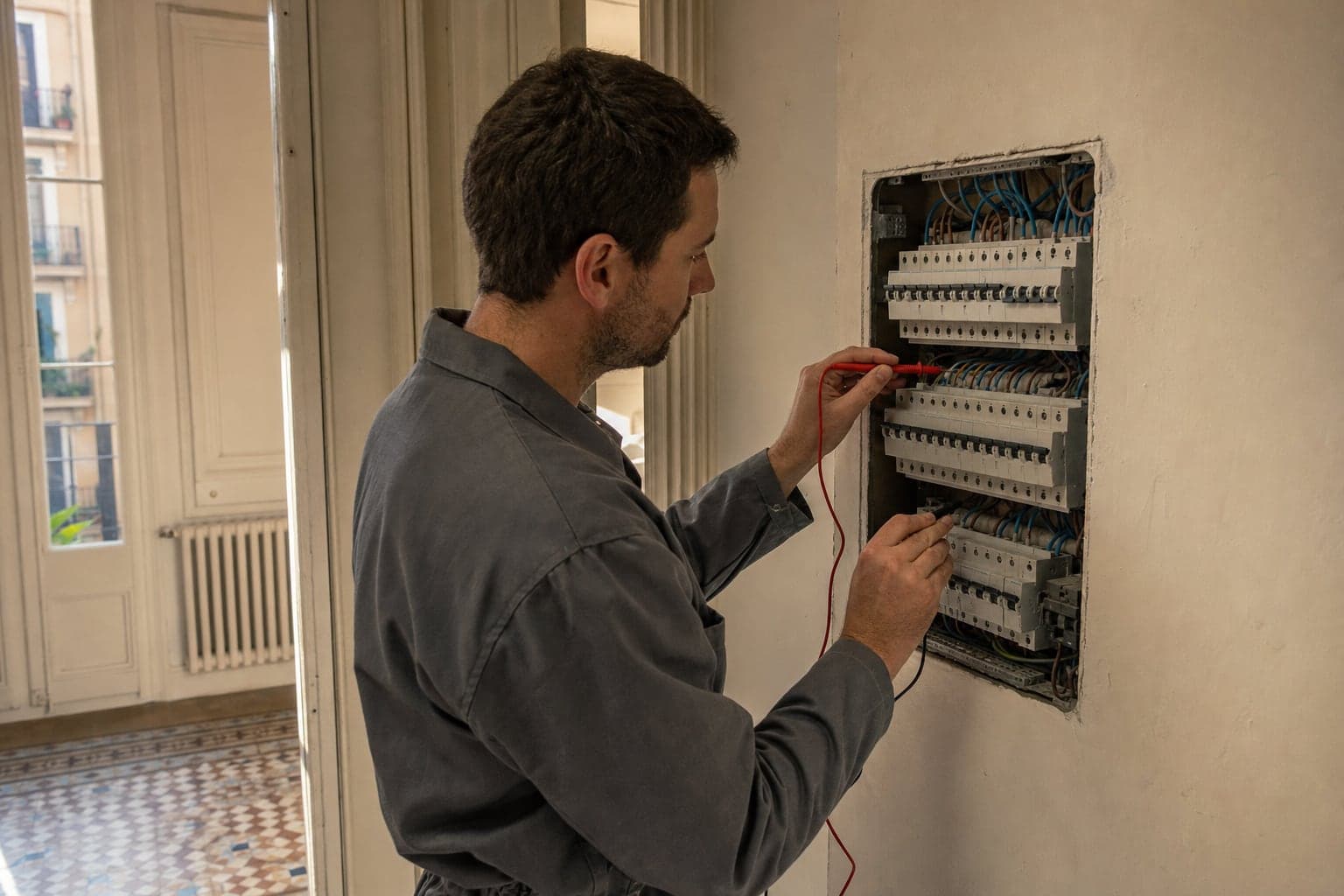
MOVES is Spain's national grant programme for electric mobility, designed by IDAE (the national energy agency) and run by each autonomous region; in Catalonia it is handled by ICAEN (Institut Català d'Energia). Its calls have subsidised part of the cost of installing a charging point in a private owner's or a residents' community's parking space. Its continuity and budget have depended on successive extensions, so in 2026 the first step is to check whether the call is still open. The installation itself, with us, starts at €700 in a garage space, with the charger priced separately.
How MOVES works in practice
The programme has had several editions (the best known being MOVES III, funded by the EU's Next Generation money) and two main lines: buying electric vehicles and charging infrastructure. For an individual, the usual pattern has been a grant covering a percentage of the eligible cost of the charging point, with a cap per installation, and a slightly higher percentage in small municipalities. We do not quote figures because they have changed between calls and because, once a region's budget runs out, new applications may go on a waiting list.
Another key point: in recent editions the grant was not deducted up front. You paid for the installation, had it legalised and then applied with invoices and proof of payment. Payment could take months. Do your sums as if nothing will arrive in the short term.
Who has been able to apply
- Individuals installing a charging point in their own parking space, or in some cases a rented one with authorisation.
- Residents' communities installing pre-wiring or shared charging points in the garage.
- Self-employed people and companies, under different conditions and de minimis aid limits.
- Public bodies, through specific lines.
In a shared garage, Spain's Horizontal Property Law (article 17.5) lets you install a charging point for private use in your own space by notifying the community beforehand, without a vote, as long as you bear the cost. Keep that written notice, as it is also useful for the grant.
What paperwork is usually required
| Document | What it is for | Who prepares it |
|---|---|---|
| Itemised installation invoice | Proving the eligible cost | The installer |
| Charger invoice or data sheet | Proving the equipment and its specs | The seller or the installer |
| Bank proof of payment | Showing payment was made (not in cash) | You |
| Electrical installation certificate (CIE, the boletín) | Proving the installation meets the REBT and is registered | The authorised installer |
| Photos of the installed point | Showing it exists and where it is | You or the installer |
| Notice to the community (shared garage) | Showing the procedure was followed | You |
| Personal ID and proof of the parking space | Identifying the applicant and the location | You |
Each call sets the exact list. Before paying, download ICAEN's rules and compare them with this table: sometimes the invoice has to state the charger's power or serial number, or the unit has to be a smart, connected model.
The installation: what it includes and which rules apply
A home charging point needs a dedicated circuit from your meter, or from the building's central meter room, to the parking space, with the right protection (suitable circuit breaker and RCD). The reference standard is Spain's Low Voltage Electrical Regulation (REBT), specifically ITC-BT-52, and when the job is done the authorised installer issues the installation certificate that is registered in Catalonia. That document is also what grants usually ask for.
| Job | Price from | Notes |
|---|---|---|
| Charging point in a garage space | €700 | charger not included; depends on distance to the meter |
| Assessment visit + first hour | €60 | travel within Barcelona included |
| Fuse box (consumer unit) replacement | €450 | if the current panel cannot take the new circuit |
What moves the price most is the distance between the meter room and your space. In many buildings in the Eixample or Sant Gervasi the meters are on the ground floor and the garage two or three levels below, which means more metres of cable and conduit. It also matters whether you need to raise your contracted power or whether a load manager that throttles the charger when the home is drawing more makes sense.
What to check in 2026 before installing
- Whether ICAEN's call is still open and funded, or whether a programme replacing MOVES has been announced.
- Whether the invoice must be dated after a specific date for the cost to be eligible.
- Whether the charger you plan to buy meets the technical requirements (for example, being connected).
- Whether the IRPF income tax deduction for installing a charging point, approved with a deadline and later extended, still applies; check the current rules or your gestor (tax adviser).
- Whether your local council or municipal tax bylaw offers any related rebate; it varies between municipalities.
- That the installer is authorised and hands you the installation certificate.
Frequently asked questions
Is MOVES still running in 2026? It depends on extensions and on the budget available in Catalonia. Check the ICAEN or IDAE website before taking the grant for granted, because the conditions have changed between editions.
How much does MOVES pay for a charging point? In previous calls it covered a percentage of the eligible cost with a cap per installation, different for individuals, companies and small municipalities. The exact amount is set by the current call, so do not count on it until you have read it.
Do I have to apply before installing the charger? In recent editions for individuals, you applied after installing and paying, with invoices and the certificate. Even so, check the rules: some lines may require a different order.
Do I need the community's permission to put a charger in my space? You do not need a vote: notifying the community beforehand is enough if you pay the cost, under article 17.5 of the Horizontal Property Law. Keep a copy of that notice.
Do you provide the documents grants ask for? We give you an itemised invoice, the details of the installed charger and the electrical installation certificate. You or your gestor submit the application with that paperwork.
If you want a charging point in your parking space, ask for a free quote: we check the route from your meter, give you a fixed price and reply within 24 hours, with the paperwork ready in case you can apply for a grant.
This article is part of our Electrical work service.